The $40 Million Backhoe Death Sentence Hiding in Your 2026 Equipment Budget
The Backhoes Are Dying and Your Budget Is Bleeding
Here's the thing nobody tells you about the construction equipment market. It's not just shrinking. It's actively cannibalizing itself. Backhoes — the workhorses of residential construction for decades — just took a brutal hit. Sales dropped % in the first half of . That's not a slump. That's a collapse.
I've been watching this trend for years. But the speed of this decline in is different. It's not a slow fade. It's a hard pivot. Contractors aren't just buying fewer backhoes. They're actively replacing them. And the machine they're choosing instead is changing the entire economics of site preparation.
The numbers are stark. While backhoes fell, compact track loaders grew by .% to nearly , units. That's a massive divergence. It suggests a fundamental shift in how contractors view versatility. The backhoe is no longer the default. It's a legacy choice. And legacy choices come with a price tag you might not see in the initial purchase.
Think about the last time you bought a backhoe. You probably justified it with versatility. One machine, two jobs. Dig and lift. It made sense in . It made sense in . But in , the math is different. The cost of fuel, the wear on the hydraulic systems, the limited dig depth. It all adds up. And when you factor in the rising cost of labor, the backhoe starts to look like a very expensive way to do a job a smaller machine can do faster.
Why the Compact Track Loader Is Eating the Backhoes Lunch
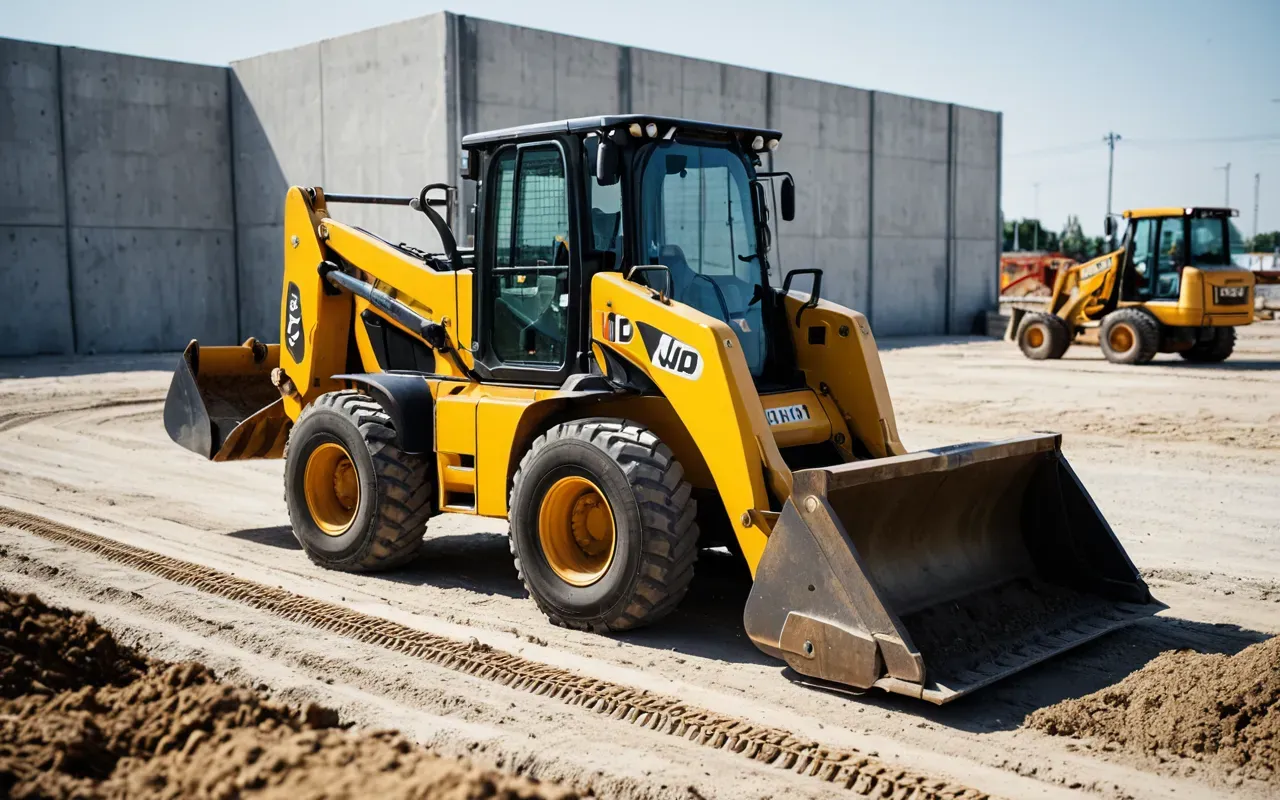
The compact track loader, or CTL, isn't just a smaller backhoe. It's a different philosophy of construction. It's about agility. About precision. About doing more with less. And that's exactly what modern construction demands. Sites are smaller. Access is tighter. The margin for error is thinner. The CTL fits that world perfectly. The backhoe does not.
Look at the top sellers. Kubota, Caterpillar, Bobcat, Deere, Takeuchi. These aren't hobbyist brands. These are industrial powerhouses. And they're all pouring resources into the CTL segment. Why? Because that's where the money is. The market is telling them something. The backhoe is a niche. The CTL is the future. And the manufacturers are betting their balance sheets on that bet.
I was struck by the new releases. Kubota launched its largest CTL ever, the SVL-. It has a ,-pound footprint. It has more horsepower. More hydraulic flow. It's not a toy. It's a serious material handler. And it's competing directly with the job the backhoe used to do. But it does it with better visibility, better stability, and a lower cost per hour. That's a hard combination to beat.
And it's not just Kubota. Caterpillar released the , a ,-pound machine with over , pounds of capacity. Hyundai teased the HT, a tool carrier for residential construction. Yanmar rolled out nine new models. The market is flooded with options. And all of them are aimed at the same target. The backhoe. They're saying, in machine language, that the backhoe is obsolete for most jobs. And the data backs them up.
The Excavator Market Is Also in a Quiet Crisis
It's not just the backhoes. The excavator market is also under pressure. Sales of full-sized crawler excavators dropped % in the first half of . That's a significant decline. And it's not just a matter of fewer units. It's a matter of who is selling them. Caterpillar is the only top-five manufacturer to see growth. Deere, Komatsu, Kubota, and Hitachi are all down. Some by significant margins.
This is a red flag. Excavators are the backbone of earthmoving. If the excavator market is shrinking, it suggests that the overall construction volume is not what it used to be. Or, it suggests that the mix of projects is changing. We're seeing more residential, more commercial, less heavy civil. And that shift favors smaller, more agile machines. The big iron is losing its prime.
But don't think the manufacturers are standing still. Volvo released two next-gen excavators, the ECR and the EC. The EC has the largest bucket capacity in its class, six cubic yards. That's a serious machine. And it's aimed at productivity. At doing more work per hour. At reducing the cost per cubic yard of dirt moved. It's a direct response to the market pressure. The big iron is fighting back. But it's fighting on a smaller battlefield.
The Wheel Loader and Dozer Segments Are Holding Steady
Not everything is crashing. The wheel loader market, while down %, is still a significant segment. About , units were sold in the first half of . Case was the only top-five manufacturer to see growth. That's interesting. It suggests that in some applications, the wheel loader is still the king. Material handling, snow removal, utility work. These are jobs where the backhoe and the CTL are not the right tool.
Deere added two new models to its X-series lineup, the X-Tier and the X-Tier. These are heavy hitters. They weigh over , pounds. They have electric variable transmissions. They have pile slip assist. These aren't machines for the average contractor. They're for the big boys. The heavy civil contractors. The mining companies. The waste management firms. And they're still buying. That's a good sign. The heavy segment is still alive.
The dozer market is similar. Down %, but still a significant category. About , units were sold. Caterpillar holds the top spot. Deere is second. Case is fourth. The market is stable. It's not growing, but it's not collapsing. And that's because the dozer is a specialized machine. It does one job, and it does it well. It pushes dirt. It grades. It levels. It's not trying to be everything to everyone. And that focus is why it's still relevant.
What This Means for Your Construction Budget in
So what does this all mean for you? If you're a contractor, you're facing a choice. Do you stick with the backhoe? Or do you make the switch? The data says the switch is happening. The market is moving. And if you're not moving with it, you're falling behind. And falling behind in construction is expensive. It means higher fuel costs. Higher maintenance costs. Lower productivity. And ultimately, lower profit margins.
I've seen contractors who clung to their backhoes for too long. They thought it was cheaper. It was cheaper to buy. But it was more expensive to run. The fuel consumption was higher. The hydraulic wear was greater. The operator was less comfortable. And the job took longer. And in construction, time is money. A lot of money. The CTL isn't just a better machine. It's a better business decision. And the % drop in backhoe sales is the market confirming that decision.
But it's not just about the machine. It's the ecosystem. The suppliers. The dealers. The service networks. All of them are shifting. Dealers are stocking more CTLs. Technicians are training on CTLs. Parts inventory is skewed toward CTLs. Buy a backhoe now and you'll find it harder to get parts. Harder to get service. Harder to find a dealer who really understands the machine. That's a hidden cost few people factor in.
The Hidden Winners and Losers in This Shift
So who's winning here? The manufacturers putting real money into the CTL segment. Kubota, Caterpillar, Bobcat. They're seeing growth. Market share gains. Their sales teams are closing more deals, their service departments stay busy. They're winning — and they're winning because they listen to the market. They give the contractor what he actually wants: a machine that does more, costs less, and lasts longer.
And who's losing? The backhoe manufacturers who aren't innovating. The dealers carrying the wrong mix of machines. The contractors still buying backhoes out of habit. They're losing share. Losing revenue. Losing relevance. In a tight market, losing relevance is fatal. The backhoe isn't dead. But it is dying. The only way to survive is to adapt — or find a niche where the backhoe is still the best tool.
There is one niche where it still holds strong. Utility work. Digging for pipes. Cables. Foundations in tight spaces. The backhoe has a dig depth a CTL simply can't match, and in that niche it's still king. But it's a shrinking niche. As the market tilts toward more residential, more commercial, less heavy civil, that niche keeps getting smaller. The backhoe is a specialist now. And specialists are at risk when the market generalizes.
The Future of Construction Equipment Is Smaller and Smarter
The trend is clear. The future of construction equipment is smaller, smarter, more efficient. Machines are getting smaller. The technology keeps getting better. Cost per hour is going down, productivity is going up. That's the direction of travel. And it favors the contractor willing to change. Willing to let go of the old ways. Willing to invest in the new.
I've been in this industry a long time. I've watched the shift from diesel to electric. Manual to automatic. Small to large. Every time, the manufacturers who adapted won. The ones who didn't, lost. The backhoe is the latest casualty — and a cautionary tale. A reminder that in construction, standing still is moving backward. And moving backward is a very expensive way to do business.
So what should you do? Review your equipment fleet. Look at your costs. Your productivity. Your margins. Then ask yourself: am I using the right machine for the job? If the answer is no, it's time to change. Time to look at the CTL. Time to look at the new excavators. Time to look at the smart wheel loaders. And time to stop letting the backhoe hold you back. The future is here. And it's smaller than you think.
Comments ()