The ten percent strength loss hiding in your concrete order
The quiet thief stealing your strength rating
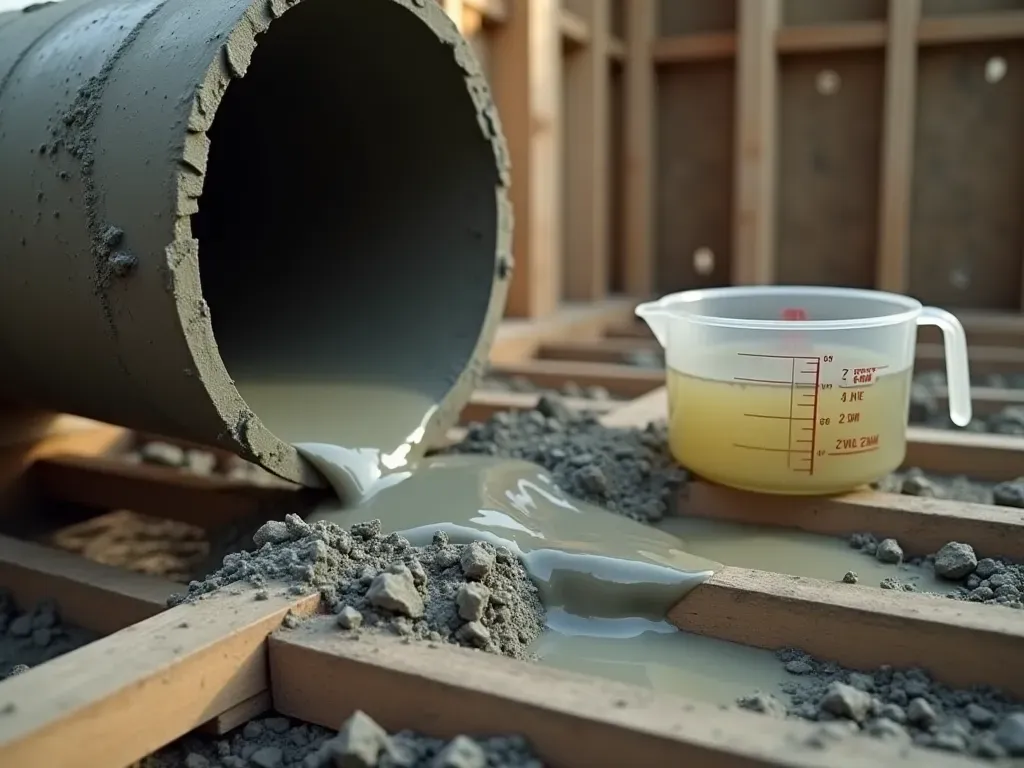
You paid a premium for high-grade structural concrete. The truck showed up on time. Everything looked right. But somewhere in that mixing drum is a ten percent strength penalty you never ordered.
This is the most underreported failure mode in modern construction. It doesn't happen because of bad cement or poor aggregates. It happens because someone added a few gallons of water to make pouring easier.
The American Concrete Institute has documented this effect repeatedly. Every additional gallon beyond the design mix can slash load-bearing capacity by up to ten percent. Sounds small. Until you realize it's a structural compromise.
A multi-story building designed for specific loads becomes vulnerable. Cracking starts early. Collapse risk grows quietly over time. And nobody sees it coming, because the concrete looks fine on day one.
I've seen site supervisors ignore this warning. They just want the pour done faster. But speed at the cost of structural integrity is not a trade-off worth making.
Why site crews add water without permission
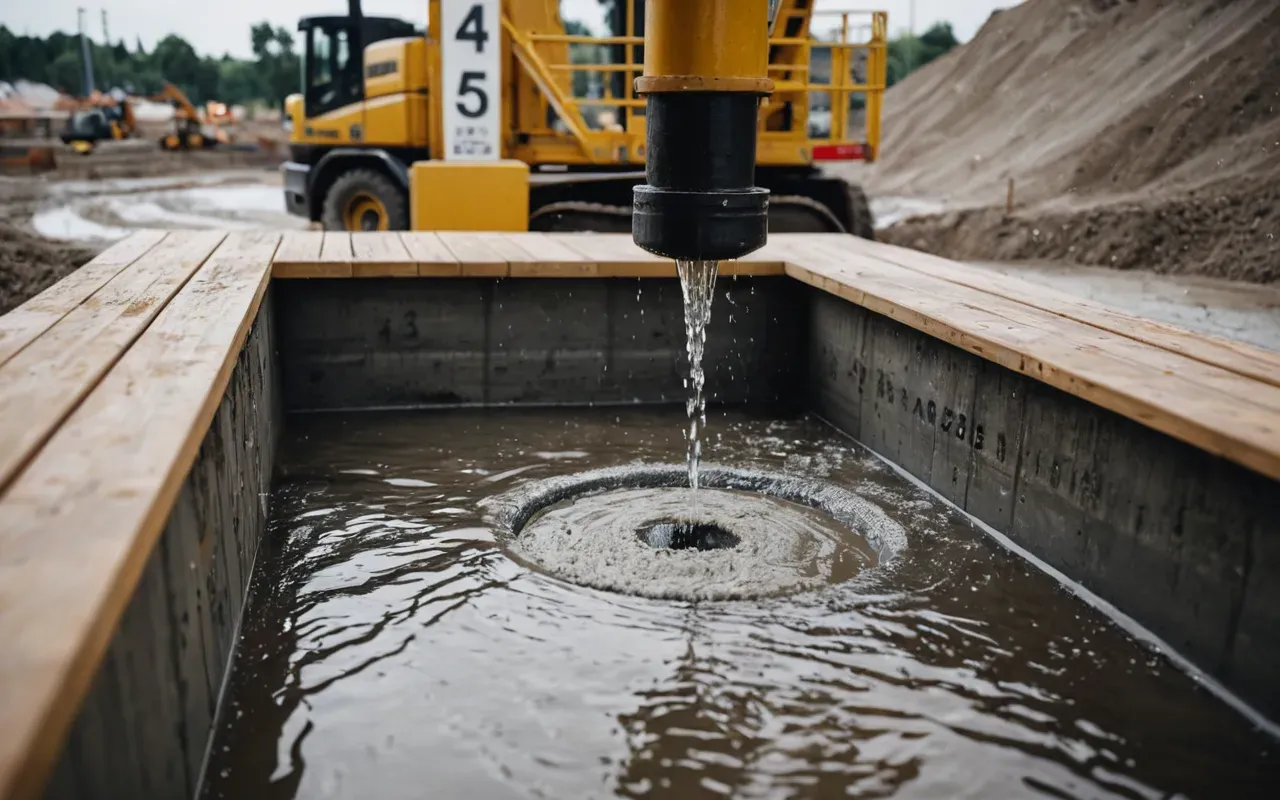
Here's the thing. Wet concrete flows easier through tight reinforcement bars. It spreads with less manual labor. So drivers or impatient workers grab a hose and pour dozens of liters into the drum.
The motivation is practical. The consequence is catastrophic. That extra water destroys the precise mix ratio calculated at the batching plant.
Water added beyond the specified limit makes the decking porous and fragile. The surface turns into a powder layer that peels off when dry. And the internal structure is permanently weakened.
To be fair, it isn't always malicious. Sometimes it's desperation. But desperation doesn't change the physics of cement hydration.
If you're managing a project and want to understand how supply chain pressures affect material quality, check out this analysis on why a consulting firm stopped relying on supplier promises. It hits the same nerve from another angle.
Sign one is puddles of free water on the surface
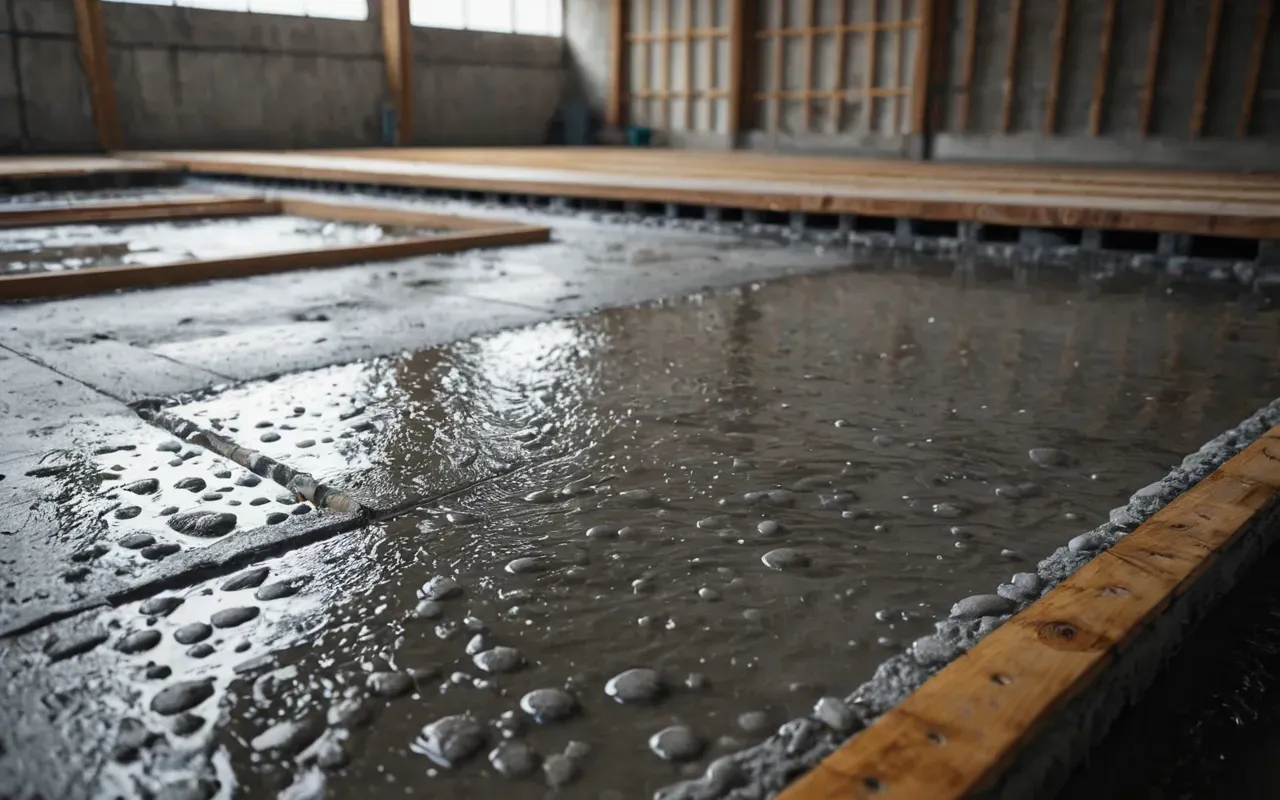
This warning appears within minutes of pouring. When concrete has too much water, the heavy aggregates settle fast and force excess liquid to rise.
You'll see thick sheets of free-standing water pooling on top. In engineering terms, that's severe bleeding.
That surface water carries fine cement dust away. What's left behind is a weak powdery layer that fails under even light stress.
See this pattern across a fresh pour? The batch is heavily over-saturated. Do not proceed with finishing work.
Sign two is total collapse in the slump test
The slump test is your first line of defense. It measures workability before the concrete enters any structural element.
A balanced mix sinks slightly but holds a firm conical shape. That tells you the water-cement ratio is intact.
When extra water has been added, the pile spreads out flat like soup. Total collapse. Immediate rejection.
I've watched supervisors hesitate here. They think the pour can still work out. It can't. The structural math is already broken.
If you want to understand the full window of time where concrete decisions matter most, this piece on the thirty eight minute concrete window gives you the timeline context.
Sign three is gravel separating from cement paste
Proper premix concrete looks uniform and creamy. Stones stay coated in thick paste as it moves through the delivery chute.
When excess water drops the viscosity too low, heavy granite stones separate entirely. They pile on one side while runny liquid flows ahead.
Once cured, that creates honeycombing inside columns and beams. Hollow pockets form around steel rebar.
Moisture gets trapped in those voids. Rust starts eating your structural steel from the inside out.
If you're comparing equipment choices that affect long term maintenance costs, see six ready mix plant manufacturers worth your money for a practical comparison.
Sign four is unusually long hardening time
Fresh concrete for residential slabs should reach initial stiff setting within a predictable timeframe under normal temperatures.
Diluted concrete delays the chemical hydration process. Cement particles stay widely separated in watery liquid.
If workers walk on a poured slab hours later and their boots sink deep into soft slush, the batch was severely diluted.
Extended drying delays disrupt schedules. And the internal crystalline bond is permanently weakened.

Sign five is early shrinkage cracks across the deck
As wet concrete dries under sun or wind, excess internal water evaporates rapidly into the atmosphere.
In diluted batches, that rapid water loss causes dramatic volume shrinkage while the concrete is still plastic.
The surface tears apart, forming long parallel cracks before the cement even hardens. These are not cosmetic flaws.
Rainwater penetrates through those cracks later. Trapped moisture corrodes reinforcement steel and leads to costly repairs.
I've seen buildings with leaking ceilings traced back to exactly this failure mode. The cracks were there from day one.
How to control quality before the pour happens
Protection starts the moment the delivery truck arrives. Your site engineer must check the delivery ticket before any discharge.
The ticket states the exact water-cement ratio and designed slump level. That's your legal basis to refuse unauthorized modifications.
Perform an immediate slump test at the truck discharge point. If the measurement exceeds the specified limit, halt operations.
Maintain a strict no added water policy. If workers complain the mix is too stiff, require approved chemical plasticizers from the supplier.
This isn't bureaucracy. This is physics. And the ten percent strength loss does not care about your schedule.
Comments ()